01 · Context
A fast loan journey still needs clarity and trust.
Plebgraph needed an end-to-end mobile experience that could take borrowers from registration and eligibility through KYC, application, disbursement and repayment.
Digital lending asks users to share sensitive identity and financial information before they receive value. Speed was important, but reducing steps alone was not enough: borrowers also needed to understand what information was required, why it was needed and what to do next.
The design challenge was therefore broader than creating screens. We needed to make a regulated, multi-stage journey feel manageable while keeping product, engineering and QA aligned across a large design scope.
02 · My role
Hands-on design leadership across the full product.
I worked with the Project Manager to translate business and functional requirements into flows, while coordinating a six-person design team from exploration through implementation support.
Problem framing
Gathered requirements from the PM, conducted secondary research and converted inputs into design problems and journey priorities.
Solution direction
Facilitated brainstorming and design discussions, shaped critical flows and coordinated feasibility conversations with development.
Team leadership
Allocated tasks, reviewed work, provided feedback and approved final design output across all major flows.
Delivery support
Maintained design-system consistency and worked with developers and QA as the implemented product progressed.
03 · Product journey
One connected experience—from intent to repayment.
I remained involved across the full journey, personally shaping critical decisions and reviewing the team’s work for consistency.
04 · Product decision
Reducing manual effort without creating a new dead end.
DigiLocker with a manual-upload fallback
Borrowers initially had to locate and upload multiple documents manually. The long, tiring process created a clear abandonment risk.
We proposed retrieving verified documents through DigiLocker and discussed technical feasibility with the development team.
DigiLocker reduced effort, but could not become the only route. Manual upload remained available as a fallback.
- Find documents
- Capture or scan
- Upload individually
- Resolve upload errors
- Authenticate with DigiLocker
- Select verified documents
- Review retrieved details
- Continue KYC
05 · Usability decision
The homepage needed to serve existing borrowers too.
Moving a critical action out of hidden navigation
Participants became lost during repayment because the section was placed inside the hamburger menu.
The homepage mainly promoted “Get Loan Now,” prioritising acquisition even when an active borrower needed servicing.
We added a direct repayment entry point on the homepage, reducing dependence on secondary navigation.
Eligibility and loan application remain the primary actions.
Loan status and repayment become visible, immediate actions.
06 · Team leadership
Consistency came from a working system, not final-stage policing.
Six designers were contributing to interconnected flows. The operating model needed to make decisions and reusable patterns visible to everyone.
Shared design system
Reusable components and agreed visual patterns were created early and shared across the team.
Continuous updates
When a component or pattern changed after discussion, the shared system was updated for subsequent work.
Daily 10-minute sync
A short daily forum surfaced blockers, reviewed challenges and aligned the team on possible solutions.
07 · Validation
Testing before and during development.
The Figma prototype was reviewed internally with approximately 40 participants to identify unclear steps, navigation problems and usability friction before engineering investment.
The QA team tested the implemented product as development progressed, surfacing functional and interaction issues for resolution.
08 · Visual design
A consistent interface across the lending lifecycle.
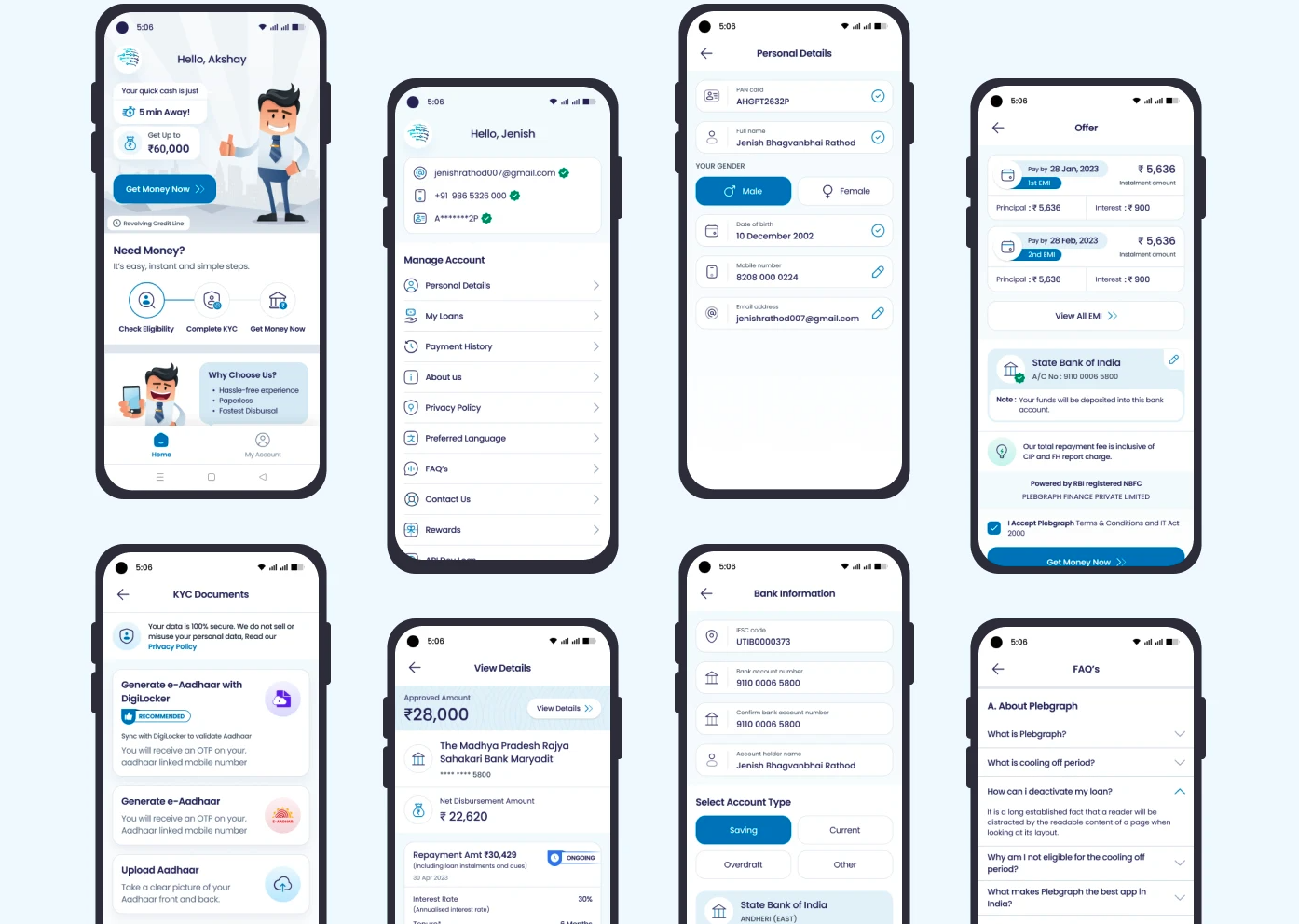
Selected screens from the original 2024 project show how the experience connected onboarding, KYC, personal and bank information, loan offers, repayment details and support within one shared visual system.
09 · Outcome
From prototype decisions to a released lending product.
The designed experience moved through development and QA and was released publicly on Google Play. Later versions may differ from the 2024 interface shown in the original case presentation.
The lasting lesson was that product leadership happens at three levels simultaneously: improving the customer journey, aligning technical feasibility and giving the design team a shared system for making consistent decisions.